
Success in academics is not simply about studying harder—it’s about studying smarter. Despite spending a lot of time reading, many students find it difficult to retain what they have learned. The key to achieving excellent grades lies in using effective study tips, maintaining consistency, and creating a positive and productive learning environment.
Whether you’re prepared for school examinations, college tests, competitive exams, or professional certification courses, these practical study strategies can help you learn more efficiently and achieve your academic goals.
Why Effective Study Tips and Good Study Habits Matter
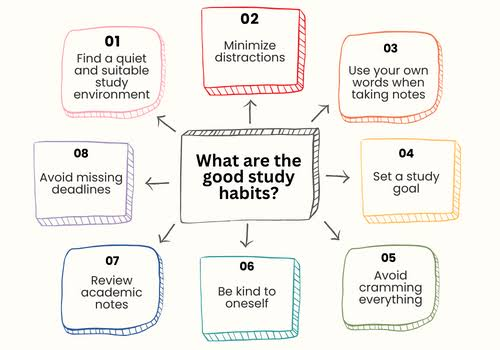
Developing effective study habits helps students:
- find a quiet and suitable study environment
- Minimize distraction
- Use your own words when taking notes
- Set a study goal
- Avoid cramming everything
- Be kind to oneself
- Review academic notes
Consistent study habits are more effective than last-minute cramming, as they allow your brain to process and retain information over time.
1. Set Clear Study Goals: An Effective Study Tip for Academic Success
Before starting a study session, decide what you want to accomplish. Instead of saying, “I’ll study mathematics,” set a specific goal like, “I’ll complete two chapters and solve 20 practice questions.”
Clear objectives help you stay focused and measure your progress.
2. Create a Study Schedule
Planning your study time makes it easier to cover the entire syllabus without feeling overwhelmed.
A good study schedule should include:
- Fixed study hours
- Short breaks
- Time for revision
- Practice sessions
- Relaxation and sleep
Following a routine builds discipline and improves productivity.
3. Choose a Distraction-Free Study Space
Your study environment plays a major role in concentration.
Select a quiet, comfortable place with:
- Good lighting
- Comfortable seating
- Minimal noise
- Organized study materials
- Stable internet connection if needed
Keep your phone on silent or use focus mode while studying.
4. Study in Short Sessions
Long study sessions often reduce concentration. Instead, study for 25–50 minutes followed by a 5–10 minute break.
Short, focused sessions help maintain energy and improve information retention.
5. Take Effective Notes
Writing notes helps you understand and remember information.
Useful note-taking techniques include:
- Bullet points
- Mind maps
- Flowcharts
- Diagrams
- Tables
- Color-coded highlights
Summarize key concepts in your own words instead of copying entire paragraphs.
6. Practice Active Learning
Instead of simply reading textbooks, actively engage with the material.
Try these methods:
- Solve practice questions
- Explain concepts aloud
- Teach a friend
- Create flashcards
- Participate in group discussions
Active learning strengthens understanding and long-term memory.
7. Revise Regularly
Revision is essential for remembering information.
A simple revision plan might include:
- Review new topics within 24 hours.
- Revise weekly.
- Conduct a full revision before exams.
Frequent revision reduces forgetting and increases confidence.
8. Practice Previous Years’ Question Papers
Solving previous exam papers helps you:
- Understand exam patterns
- Improve time management
- Identify important topics
- Build confidence
Practice under timed conditions to simulate the actual exam experience.
9. Focus on Understanding, Not Memorizing: One of the most effective study tips :
Memorization has its place, but understanding concepts allows you to apply knowledge in different situations.
Ask questions like:
- Why does this happen?
- How does it work?
- Where can I apply this concept?
This approach encourages deeper learning.
10. Stay Organized
Keeping your study materials well organized is one of the most effective study tips for staying focused, saving time, and improving your learning.
Maintain separate folders for:
- Notes
- Assignments
- Practice papers
- Reference materials
- Project work
An organized workspace saves time and reduces stress.
11. Use Technology Wisely
Educational apps, online courses, and digital resources can enhance learning.
However, avoid unnecessary social media browsing during study time. Use technology as a learning tool rather than a distraction.
12. Get Enough Sleep
Sleep is essential for memory and concentration, making it an important part of effective study tips for better learning and academic performance.
Aim for 7–9 hours of quality sleep each night, especially before exams. Lack of sleep can affect focus, decision-making, and problem-solving skills.
13. Maintain a Healthy Lifestyle
Your physical health directly affects your academic performance.
Healthy habits include:
- Eating balanced meals
- Drinking enough water
- Exercising regularly
- Taking short walks during breaks
- Limiting excessive caffeine
A healthy body supports better learning and concentration.
14. Stay Positive and Motivated: Effective Study Tips for Academic Success
Every student faces challenges while learning. By following effective study tips, celebrating small achievements, staying patient with yourself, and maintaining consistent effort, you can make steady progress and build confidence in your learning journey.
Setting realistic goals and tracking your improvements can help maintain motivation over time.
15. Ask for Help When Needed: One of the Most Effective Study Tips
If you find a topic difficult, don’t hesitate to seek guidance.
You can ask:
- Teachers
- Mentors
- Classmates
- Tutors
- Academic counselors
Clarifying doubts early prevents confusion from building up.
Common Study Mistakes to Avoid: Effective Study Tips for Better Learning
Many students unintentionally reduce their learning efficiency by:
- Studying only before exams
- Multitasking while studying
- Ignoring revision
- Using ineffective memorization techniques
- Spending too much time on social media
- Skipping practice questions
- Neglecting sleep and health
Recognizing these habits can help you replace them with more effective study strategies.
Frequently Asked Questions
How many hours should students study each day?
The ideal study duration varies depending on age, academic level, and goals. The quality of study is often more important than the total number of hours. Consistent, focused sessions with regular breaks are generally more effective than long, unfocused study periods.
Is studying every day better than cramming?
Yes. Studying regularly helps improve understanding and long-term retention, while last-minute cramming may increase stress and make it harder to remember information.
How can I improve my concentration while studying?
Reduce distractions, study in a quiet environment, set clear goals, take regular breaks, and maintain healthy sleep and exercise habits.
Should students study alone or in groups?
Both strategies may be advantageous. While studying in a group can facilitate debate, problem-solving, and idea explanation, studying alone promotes focused learning.
Conclusion
Developing the proper habits, maintaining organization, and employing strategies that enhance comprehension rather than depending only on memorisation are all important components of effective study. You may boost your confidence and academic achievement by controlling your time, creating clear goals, revising frequently, and leading a healthy lifestyle.
Recall that perseverance is the foundation of success. Over time, even minor adjustments to your daily study schedule might have a big impact. Take a step toward reaching your academic and professional objectives by putting these techniques into practice right now.